
 By
By You spend six months grafting. Every quote lands. The phone doesn’t stop. By the time your busy season ends, your bank account looks better than it has all year.
Then the off-season arrives.
For landscaping businesses, managing off-season cash flow is a challenge every owner knows is coming — and yet it still catches most of them short. Not because they didn’t earn enough. Most landscaping businesses I’ve seen turn over solid money through their busy season. The problem isn’t what comes in when the work is flowing. It’s what happens to it after.
In the UK, Canada and the US, the landscaping slow season typically runs October through March. In Australia and New Zealand, it flips — the quiet stretch runs April through September. Different months, same problem: five or six months of wages, insurance, equipment finance, vehicle costs and everything else, with almost nothing coming in. If you didn’t deliberately protect a portion of what you earned during the busy season, there’s nothing left to draw from.
And most landscaping business owners didn’t.
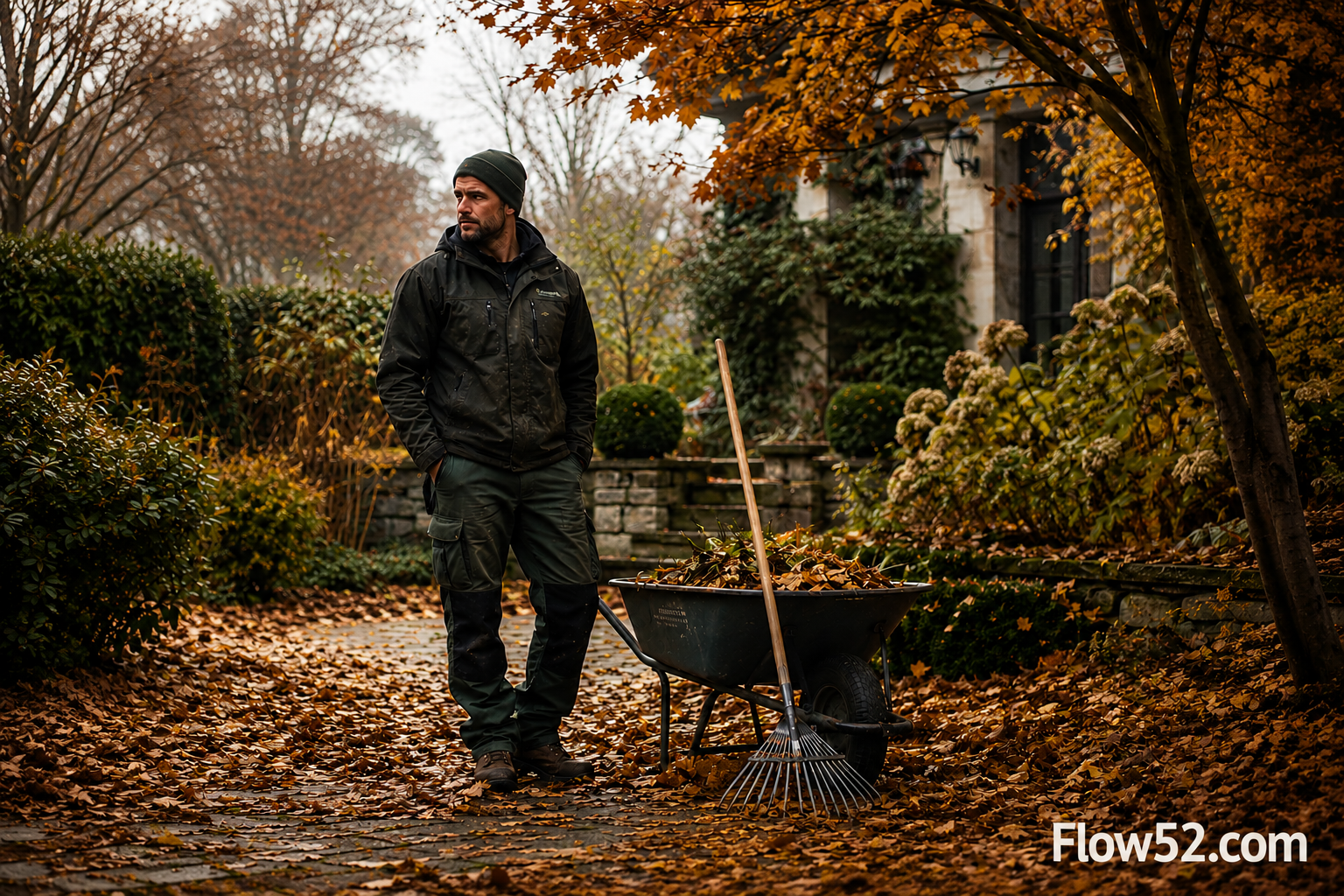
The Busy Season Is Where Off-Season Cash Problems Actually Start
Here’s what I’ve learned after 30 years working with and around seasonal businesses: the quiet months don’t break businesses. The busy months do.
Not because the money isn’t there. Because it gets spent.
When the invoices are rolling in, it feels safe. Safe to upgrade the work vehicle. Take on the new mower. Pay yourself a bit more — you’ve earned it. The buffer you needed for the off-season quietly disappears before the off-season even arrives. And because the work is still coming in when it goes, you don’t notice until it’s too late.
What Off-Season Cash Pressure Actually Looks Like
It’s not one big crisis. It’s a slow grind that most landscaping business owners recognise immediately:
- Paying wages for a crew with almost nothing to do, out of an account that hasn’t seen a job come through in weeks
- Equipment finance and vehicle leases coming out regardless of whether you’re earning or not
- Supplier invoices landing at the worst possible time — and having to decide which one waits
- Taking on jobs you’d normally turn down, just to keep some cash moving
- Telling yourself next season you’ll put money aside. Then next season comes and the same pattern repeats.
- Watching the balance every few days, knowing the end of the quiet season is still weeks away
None of this is a character flaw. It’s a structural problem. The money is seasonal. The bills aren’t.
The Fix Most Landscaping Owners Never Try
When the off-season squeeze hits, the usual responses are: find more work, cut costs, or take out a loan to bridge the gap. All of these are reactions to a problem that could have been prevented.
The actual fix is separating what’s yours from what belongs to the off-season — before you get the chance to spend it.
This is the idea behind a holding account: a separate account that exists solely to hold your seasonal reserves. Not your operating account. Not your personal account. A dedicated holding account that receives a calculated amount every week during the busy season, so that by the time the quiet months arrive, the money to cover them is already there.
The concept is simple. The calculations are not — and that’s exactly why most business owners don’t do it. Working out the right weekly amount to move across requires your seasonal revenue estimates, your annual cost breakdown, and an understanding of how your income varies month by month across the year. Get the maths wrong and you either run out in the holding account or you’ve starved your operating account unnecessarily.
Flow 52 does that calculation for you.
Money builds up automatically. Bills get paid. No stress.
How the System Works
You enter your estimated monthly revenue figures — it takes about 15 minutes. The system works out three weekly transfer amounts, calibrated to how much you’re earning at different points in the year: a higher amount during your peak months, a different amount through the shoulder season, and a smaller amount during quieter weeks. The more you’re earning, the more moves into the holding account. The amounts are precise — not guesses.
- You set up three automatic transfers from your operating account to your holding account — once
- The transfers run every week, proportional to your seasonal income pattern
- Your holding account builds up through the busy season without you touching it
- When the off-season arrives, your fixed costs — wages, insurance, leases, supplier accounts — come out of the holding account that was built for them
- Your operating account stays clean. What’s in it is genuinely available to spend.
- The off-season becomes something you’ve already handled, not something you’re surviving
Landscaping Off-Season Cash Flow Doesn’t Have to Be a Survival Exercise
You built a business that earns well. The off-season cash flow problem isn’t about working harder or getting more customers — you’ve already done that part. It’s about making sure the money you earned in the busy season is still there when you need it.
The blueprint that explains the full system is free. If you want to see exactly how the holding account approach works and whether it fits your business, start here.
If you want to understand the broader pattern behind why seasonal businesses struggle every quiet season — not just landscaping — our guide to what the seasonal cash flow gap is and how to close it covers the mechanics in full. Another trade with the same problem in a different shape: pool service off-season finances.
Frequently Asked Questions
How much should a landscaping business save for the off-season?
It depends on your annual fixed costs — wages, equipment finance, insurance, vehicle leases — and how many months your slow season runs. A landscaping business with six months of low income needs to cover six months of fixed outgoings. Flow 52 calculates the exact weekly transfer amount based on your revenue pattern and costs, so you are not guessing or underestimating.
When should a landscaping business start saving for the off-season?
Today. And the sooner the better. There is an old saying: “The best time to plant an oak tree was 100 years ago. The second best time is today.” Off-season cash flow works the same way. Flow 52 spreads your saving across all 52 weeks of the year — not just the busy ones — so every week you delay is a week where the load on the remaining weeks increases. Start now, with whatever portion of the year is left. The system recalculates around your actual remaining weeks.
What is a holding account and how does it work for landscaping businesses?
A holding account is a separate bank account that holds your seasonal reserves — but the transfers into it happen every single week of the year, not just during the busy season. Flow 52 calculates three different weekly transfer amounts: a higher amount during your peak months, a mid-range amount through the shoulder season, and a smaller amount during your quietest weeks. The more you are earning, the more moves across. The less you are earning, the less moves across. The result is that by the time your fixed costs fall due — wages, insurance, equipment leases, supplier accounts — the money to cover them has already been set aside across the full year, proportional to your income. Your operating account always reflects what you genuinely have available to spend.
Can landscaping businesses in different countries use the same approach?
Yes. The approach works regardless of location. In the UK, Canada and the US, the landscaping slow season typically runs October through March. In Australia and New Zealand, it runs April through September. Different months, same structure. Flow 52 accounts for your specific seasonal pattern rather than assuming a fixed calendar, so the system works wherever your business operates.
Why do landscaping businesses run out of money in the off-season?
Most landscaping businesses earn enough during the busy season to cover a full year of costs. The problem is that money gets spent during the busy season — on equipment upgrades, higher owner drawings, or simply because a healthy account balance feels like available cash. By the time the off-season arrives, the buffer is gone. Separating off-season funds from operating funds, before they get spent, is the only reliable fix.